Kindness Welfare Team
Social Impact Division · 5 June 2026
On World Environment Day 2026, Kindness Welfare Association led the Jaipur Clean Drive at Jal Mahal — a massive cleanliness drive backed by Nagar Nigam Jaipur and SK Finance. Here is the full story of the movement that united a city.
# Jaipur Clean Drive 2026: How Hundreds of Volunteers Transformed Jal Mahal on World Environment Day
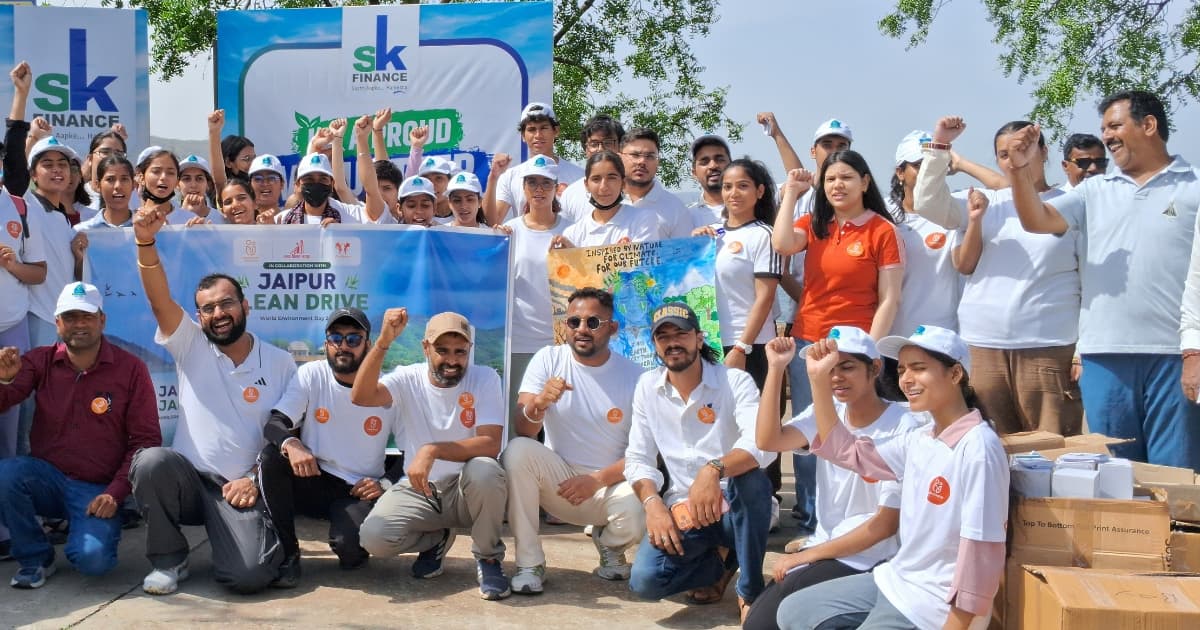
On June 5, 2026 — World Environment Day — hundreds of passionate citizens gathered at one of Jaipur's most iconic landmarks, Jal Mahal, for a cause far bigger than themselves. Armed with gloves, garbage bags, and an unshakeable resolve, they set out to reclaim the beauty of their city, one piece of litter at a time. This is the story of the Jaipur Clean Drive 2026 — a movement that proved that real change begins when ordinary people choose to act.
Every year, World Environment Day serves as a global reminder that the planet we inhabit is not something we inherit from our ancestors — it is something we borrow from our children. For Kindness Welfare Association, this day was not about symbolic gestures or social media posts. It was about rolling up sleeves, getting hands dirty, and demonstrating through action that a cleaner, greener Jaipur is not a dream — it is a choice.
The Jaipur Clean Drive 2026 was envisioned under the leadership of Rajat Jain, Director of Kindness Welfare Association, and meticulously coordinated by Bhavendra Singh, who worked tirelessly for weeks to bring together citizens, student volunteers, corporate professionals, community organisations, and municipal bodies for one shared purpose: building a cleaner and greener Jaipur.
Why Jal Mahal? The Significance of the Venue
Jal Mahal — the iconic "Water Palace" nestled in the middle of Man Sagar Lake — is more than a tourist attraction. It is a symbol of Jaipur's royal heritage, natural beauty, and cultural identity. Every year, millions of tourists from across the world visit this architectural marvel, making it one of the most photographed landmarks in Rajasthan.
However, with popularity comes a challenge. The area surrounding Jal Mahal — the approach roads, lake banks, and public pathways — often suffers from litter accumulation, plastic waste, and inadequate waste management. Food wrappers, plastic bottles, broken glass, cigarette butts, and discarded packaging mar the beauty of a heritage site that should be a source of civic pride.
By choosing Jal Mahal as the venue for the Jaipur Clean Drive 2026, Kindness Welfare Association sent a powerful message: if we cannot keep our most treasured landmarks clean, how can we expect to keep our entire city clean?
The drive was not just about cleaning up a single location. It was a statement of intent — a public declaration that Jaipur's citizens are ready to take ownership of their city's cleanliness and environmental health.
The Day of the Drive: How It All Unfolded
Early Morning Assembly — A Surge of Energy
The morning of June 5 began with an electric energy at the Jal Mahal precinct. By 7:00 AM, volunteers had already started arriving — college students, families with children, working professionals who had taken the morning off, senior citizens, NCC cadets, and representatives from local businesses and educational institutions.
Each volunteer was handed a cleanup kit containing biodegradable garbage bags, reusable gloves, and a Kindness Welfare volunteer badge. The atmosphere was a powerful mix of excitement and purpose — you could feel the collective determination in the air.
The Environmental Oath — A Pledge for Tomorrow
Before the cleanup began, all volunteers gathered for a collective Environmental Oath Ceremony. Standing together at the banks of Man Sagar Lake with Jal Mahal as the backdrop, hundreds of voices pledged:
"I promise to keep my surroundings clean, reduce plastic use, plant more trees, conserve water, and inspire others to respect and protect our environment. I will not litter, and I will not remain silent when I see others litter."
This moment — hundreds of citizens from every walk of life, standing shoulder to shoulder, pledging to protect their environment — was one of the most powerful visuals of the entire drive. It was covered extensively by regional and national media, including Dainik Bhaskar, Khabredinraat, and India Dastak News 24.
The Cleanup — Organised, Disciplined, Effective
Volunteers were divided into zonal teams, each assigned a specific area around the Jal Mahal precinct:
- Zone A: The main approach road and parking area
- Zone B: The lakefront walkway and embankment
- Zone C: The garden area and surrounding public spaces
- Zone D: The roadside drainage and green belt corridor
Each zone was led by a team captain who ensured waste was sorted into three categories:
1. Recyclable waste (plastic bottles, paper, metal cans)
2. Organic waste (food scraps, leaves, biodegradable items)
3. Non-recyclable waste (broken glass, mixed-material packaging, contaminated items)
This was not a casual, symbolic cleanup. This was a structured, municipal-grade sanitation exercise that resulted in the collection and proper disposal of an enormous volume of waste from the area.
The Partners Who Made It Possible
Nagar Nigam Jaipur — Municipal Partnership
The Jaipur Nagar Nigam (Jaipur Municipal Corporation) played a critical role in the success of the Jaipur Clean Drive 2026. Their partnership ensured:
- Logistical support: Municipal waste collection vehicles were stationed at the venue to transport collected waste to proper disposal and recycling facilities.
- Professional waste handlers: Trained sanitation workers supervised the waste segregation process and ensured safety protocols were followed.
- Infrastructure: The corporation provided additional waste bins, barricading, and signage for the event.
This collaboration between a grassroots NGO and the city's municipal body demonstrated a powerful model of public-private-civic partnership — the kind of collaboration that is essential for India's Smart City and Swachh Bharat missions to succeed.
SK Finance Ltd — Corporate Social Responsibility in Action
SK Finance Ltd, a leading financial services company based in Jaipur, stepped forward as a key corporate partner for the Jaipur Clean Drive 2026. Their support went beyond financial sponsorship:- Employee volunteers: SK Finance encouraged its employees to participate as volunteers, fielding a significant contingent on the day of the drive.
- Logistics and supplies: The company contributed to procurement of cleanup materials and volunteer kits.
- Corporate visibility: By aligning with a genuine, on-ground environmental initiative, SK Finance demonstrated that Corporate Social Responsibility (CSR) can be far more impactful than simply writing cheques — it can mobilise people and create community-level change.
We extend our sincere and heartfelt gratitude to both SK Finance Ltd and Nagar Nigam Jaipur for their invaluable collaboration and support in making this initiative a resounding success.
The Human Stories Behind the Drive
Students Who Showed Up Before Sunrise
Among the first volunteers to arrive were groups of college students from universities across Jaipur. Many had travelled significant distances, waking up before dawn to reach Jal Mahal by 6:30 AM. For them, the Jaipur Clean Drive was not just community service — it was a statement about the kind of future they want to build.
"We post photos of Jal Mahal on Instagram, but we never think about who keeps it clean," said one student volunteer. "Today, we are being that change."Families Who Taught Their Children by Example
Several families came with young children, some as young as 5 or 6 years old. These parents understood something profound: the best way to teach environmental responsibility is not through textbooks — it is through action.
Children could be seen carefully picking up litter, sorting waste, and high-fiving each other after filling their bags. These tiny hands may have collected the least amount of waste, but they carried the greatest hope for the future.
Senior Citizens Who Refused to Sit Out
Some of the most inspiring participants were senior citizens — men and women in their 60s and 70s — who came not because they had to, but because they remembered a time when Jaipur's streets were cleaner, its lakes were healthier, and civic responsibility was second nature. They came to reclaim that legacy.
Environmental Impact: Beyond the Visible Cleanup
The Jaipur Clean Drive 2026 was more than a one-day event. Its impact extends across multiple environmental dimensions:
1. Waste Diversion and Recycling
By sorting collected waste into recyclable and non-recyclable categories, the drive ensured that a significant portion of the waste was sent to recycling facilities rather than landfills. In a city where landfill overflow is a growing crisis, every kilogram diverted to recycling makes a measurable difference.
2. Water Body Protection
Man Sagar Lake — the body of water surrounding Jal Mahal — has long been a target for restoration efforts. Litter and plastic waste that accumulate on the lake banks eventually wash into the water during monsoon rains, contaminating the aquatic ecosystem and threatening the bird population that depends on the lake. The cleanup around the lake perimeter directly protects this fragile ecosystem.
3. Plastic Pollution Reduction
India generates approximately 3.5 million tonnes of plastic waste annually, and Rajasthan is one of the states with the highest plastic waste generation. The Jaipur Clean Drive targeted plastic waste specifically — collecting single-use plastic items that would otherwise take hundreds of years to decompose in the environment.
4. Public Awareness and Behaviour Change
Perhaps the most important impact of the drive was not the waste collected, but the awareness generated. When hundreds of volunteers clean a public space in broad daylight — watched by thousands of passersby, tourists, and local residents — it sends a powerful social signal: littering is not acceptable, and citizens are willing to take action.
Research in behavioural science consistently shows that visible community action is one of the most effective drivers of long-term behaviour change. The Jaipur Clean Drive planted seeds of environmental consciousness that will continue to grow long after the event itself.
Media Coverage: A Movement That Caught National Attention
The Jaipur Clean Drive 2026 received significant coverage from regional and national media outlets, amplifying its message far beyond the streets of Jaipur:
Dainik Bhaskar — India's Largest Hindi Daily
Dainik Bhaskar, India's most widely read Hindi newspaper, covered the event extensively. Their headline — "जल महल से गूंजा स्वच्छता का संदेश: जयपुर क्लीन ड्राइव 2026 का आयोजन" (A Message of Cleanliness Echoed from Jal Mahal) — captured the essence of the drive.
The Bhaskar report highlighted the environmental oath taken by volunteers, the collaboration with Nagar Nigam, and the sheer scale of citizen participation. Read the full coverage: Dainik Bhaskar — Jaipur Clean Drive 2026
Khabredinraat — Digital News Coverage
Khabredinraat published a detailed report emphasising how hundreds of citizens pledged to protect the environment. Their coverage focused on the grassroots nature of the initiative and the role of young volunteers in driving the movement. Read the full story: Khabredinraat — Hundreds Pledge to Protect the Environment
India Dastak News 24
India Dastak News 24 covered the drive with the headline "जल महल से गूंजा स्वच्छता का संदेश, सैकड़ों लोगों ने संभाली ज़िम्मेदारी" (Message of Cleanliness from Jal Mahal, Hundreds Take Responsibility). Read the full article: India Dastak News 24 — Jal Mahal Clean Drive
World Environment Day 2026: The Global Context
The Jaipur Clean Drive was timed to coincide with World Environment Day, observed annually on June 5. Established by the United Nations General Assembly in 1972, World Environment Day is the largest global platform for environmental public outreach, with participation from over 150 countries.
The 2026 theme emphasised land restoration, desertification, and drought resilience — issues particularly relevant to Rajasthan, which faces some of India's most severe environmental challenges including water scarcity, deforestation, and urban pollution.
By organising a large-scale cleanliness drive on this day, Kindness Welfare Association connected a local initiative to a global movement, demonstrating that environmental action at the city level is essential for achieving global sustainability goals.
India's Environmental Challenges in Numbers
- India generates 62 million tonnes of waste annually, of which only 43 million tonnes is collected and approximately 12 million tonnes is treated or recycled.
- Rajasthan is India's largest state by area but has one of the lowest rates of urban waste management efficiency.
- India's plastic waste generation has increased by over 30% in the last five years.
- Only 30% of Indian cities have functional waste segregation systems at the household level.
These numbers underscore the urgency of citizen-led initiatives like the Jaipur Clean Drive. Government policy alone cannot solve India's waste crisis — it requires active, sustained participation from citizens, NGOs, corporate entities, and municipal bodies working together.
Volunteer Certificates: Recognising Every Contributor
Every volunteer who participated in the Jaipur Clean Drive 2026 received an official Digital Volunteer Certificate from Kindness Welfare Association. These certificates are:
- Individually named with the volunteer's full details
- QR-code verified — anyone can scan the QR code to verify the certificate's authenticity on our website
- Downloadable — volunteers can download their certificate as a high-quality file immediately after the event
- Backed by Firestore records — every certificate is stored in our database for permanent verification
We believe that recognition inspires repetition. When a volunteer receives formal acknowledgement for their contribution, they are far more likely to participate again — and to encourage others to join. The volunteer certificate programme is designed to create a growing, self-sustaining community of environmental champions.
If you participated in the drive and have not yet downloaded your certificate, visit our Volunteer Certificate Portal to claim yours.
The Vision: Clean Jaipur, Green Jaipur
The Jaipur Clean Drive 2026 was not a one-time event. It is the beginning of a sustained movement — Clean Jaipur, Green Jaipur — that aims to make environmental responsibility a permanent part of Jaipur's civic culture.
Our Ongoing Environmental Commitments
- Regular cleanliness drives across Jaipur's public spaces, heritage sites, and residential areas
- Tree plantation campaigns in partnership with local nurseries and government bodies
- Anti-plastic awareness programmes in schools, colleges, and corporate offices
- Waste segregation training for residential colonies and commercial establishments
- Monthly volunteer meetups to plan and execute community-level environmental initiatives
How You Can Join the Movement
You do not need to wait for the next organised drive to make a difference. Here are actions you can take today:
- Carry a reusable bag and refuse single-use plastic at shops
- Segregate your household waste into wet and dry categories
- Plant a tree — even one tree in your backyard or neighbourhood makes a measurable impact
- Report illegal dumping to your local ward officer or through the Jaipur Nagar Nigam app
- Volunteer with us — join Kindness Welfare Association for regular community drives
A Message from the Team
Together, we did not just clean a public space on June 5, 2026. We strengthened a collective commitment towards environmental responsibility, civic pride, and the vision of a Clean Jaipur, Green Jaipur.
This drive was not just about cleaning today; it was about inspiring a culture of responsibility for tomorrow.
A heartfelt thank you to every single volunteer who dedicated their time, energy, and spirit to this cause. Your efforts proved that when a community comes together with a shared purpose, meaningful change becomes not just possible — it becomes inevitable.
💚 Every action counts.
💚 Every volunteer matters.
💚 Every step creates impact.
Clean Jaipur • Green JaipurFrequently Asked Questions
What was the Jaipur Clean Drive 2026?
The Jaipur Clean Drive 2026 was a large-scale cleanliness and environmental awareness drive organised by Kindness Welfare Association on World Environment Day (June 5, 2026) at Jal Mahal, Jaipur. Hundreds of volunteers participated in cleaning the area, segregating waste, and taking an environmental oath.
Who organised the Jaipur Clean Drive?
The drive was organised by Kindness Welfare Association under the leadership of Director Rajat Jain and coordinated by Bhavendra Singh. It was supported by Nagar Nigam Jaipur and SK Finance Ltd as key partners.
How can I volunteer for future clean drives in Jaipur?
Visit kindnesswelfare.com/volunteer to register as a volunteer. We organise regular environmental drives and community events throughout the year. You can also follow us on Instagram for real-time updates on upcoming events.
Was the Jaipur Clean Drive covered in the news?
Yes. The event received coverage from major media outlets including Dainik Bhaskar, Khabredinraat, and India Dastak News 24.
How do I get my volunteer certificate?
If you participated in the Jaipur Clean Drive 2026, visit our Volunteer Certificate Portal to generate and download your verified digital certificate.
What is Clean Jaipur Green Jaipur?
Clean Jaipur Green Jaipur is an ongoing environmental movement by Kindness Welfare Association aimed at making environmental responsibility a permanent part of Jaipur's civic culture through regular clean drives, tree plantations, anti-plastic campaigns, and citizen engagement programmes.
Published by Kindness Welfare Association, Jaipur — A government-recognized (12A, 80G, NGO Darpan) social welfare NGO in Rajasthan. Leading the Clean Jaipur, Green Jaipur movement for a sustainable future.